

Calf Scours (Neonatal Diarrhoea): Causes, Treatment & Rehydration Protocol
Calf Scours: The Disease That Kills More Calves Than Any Other Neonatal calf diarrhoea — commonly called calf...
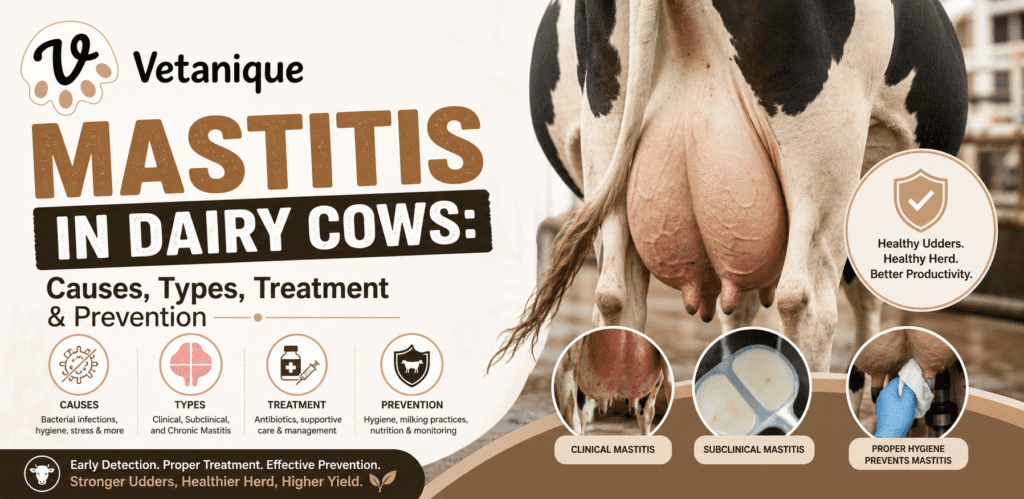
Mastitis in Dairy Cows: Causes, Types, Treatment & Prevention
Mastitis is the most economically damaging disease in the global dairy industry. Globally, it costs the dairy sector an estimated $35 billion USD per year in lost milk, treatment costs, early culling, and reduced reproductive performance. For an individual farm, a single clinical mastitis case costs between $200 and $400 depending on severity, lost milk, and the treatment protocol required. Subclinical mastitis — which shows no visible signs — is even more dangerous because it silently reduces milk yield by 5–25% per infected quarter while the farmer remains unaware.
If you are managing dairy cattle — from a two-cow smallholder operation to a 500-cow commercial dairy — mastitis control is the single most profitable area of herd health investment you can make. This guide covers everything you need to understand, diagnose, treat, and prevent mastitis at the farm level.

Mastitis is inflammation of the mammary gland (udder), almost always caused by bacterial infection. The bacteria enter through the teat canal and multiply within the udder, triggering an immune response. The immune cells (neutrophils) flood into the milk, raising the Somatic Cell Count (SCC) — the primary quality measure used by dairies worldwide.
A healthy cow has an SCC below 200,000 cells/mL. An infected quarter pushes SCC above 200,000, and a cow with clinical mastitis may produce milk with SCC above 1,000,000. Most dairy processors penalise or reject milk above 400,000 SCC — making this a direct financial issue beyond just veterinary costs.
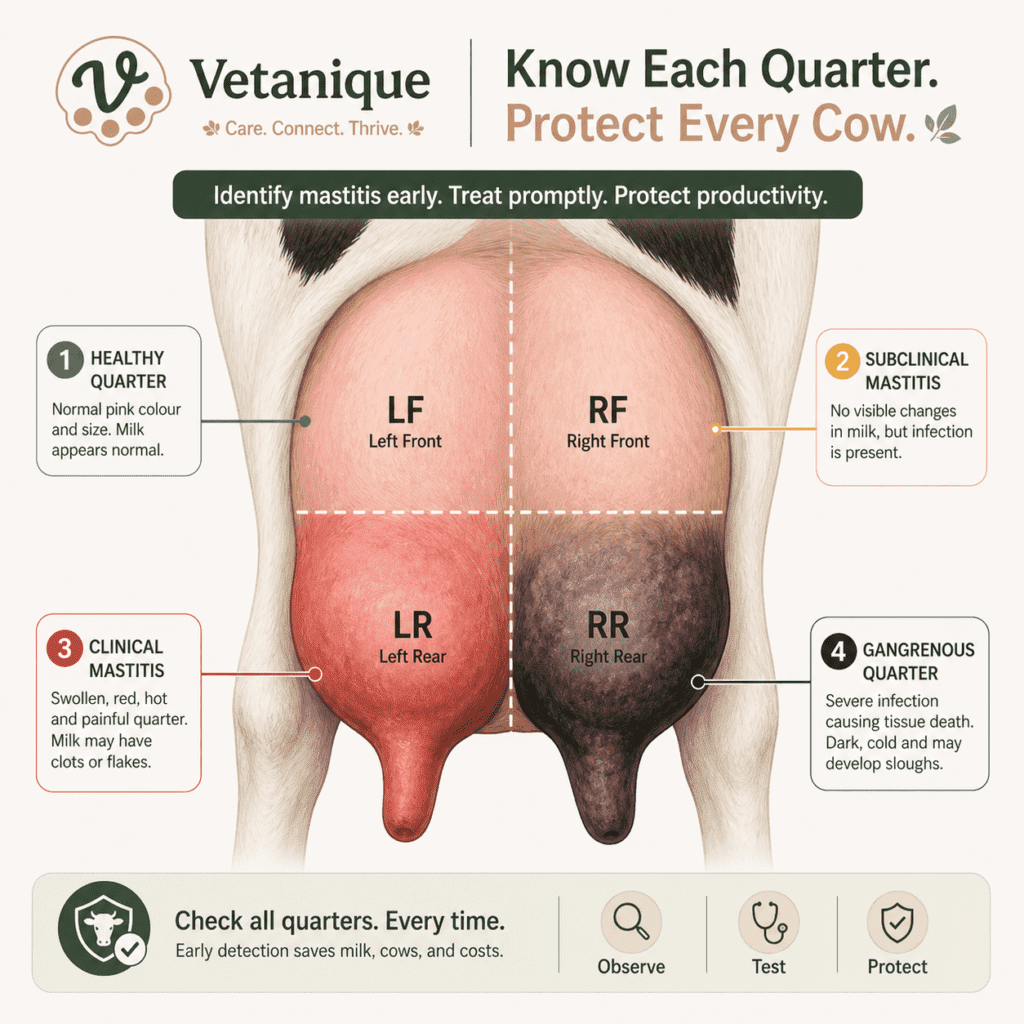
| Type | Visible Signs | SCC Level | Milk Changes | Treatment Needed? |
| Clinical (Mild) | Swollen, hot quarter; slight abnormal milk | >400,000 | Flakes, clots | Yes — prompt |
| Clinical (Severe) | Very swollen, cow off feed, fever, lame | >1,000,000 | Watery, bloody | Yes — URGENT |
| Gangrenous | Cold, blue-black quarter; cow very ill | N/A | Bloody serum | Emergency — vet now |
| Subclinical | No visible signs in cow or milk | >200,000 | Normal appearance | Yes — monitoring + dry cow therapy |
| Chronic | Recurring infections, hard fibrosed quarter | Variable | May appear normal | Evaluate for culling |
| ⚠ EMERGENCY: Signs of Gangrenous Mastitis
Quarter feels cold and hard — not hot like clinical mastitis Skin of the quarter may turn purple, blue, or black Cow severely depressed, high fever, not eating, not standing Bloody serum may drip from teat — not normal milk This is life-threatening. Call your vet immediately — do not wait. |
Understanding which bacteria cause mastitis in your herd is essential for targeted treatment and prevention. The two main groups are contagious pathogens (spread cow-to-cow, mainly during milking) and environmental pathogens (acquired from the cow’s surroundings).
| Pathogen | Type | Primary Route | SCC Pattern | Key Prevention |
| Staphylococcus aureus | Contagious | Milking equipment / hands | Chronically elevated | Teat dipping, dry cow therapy, cull chronics |
| Streptococcus agalactiae | Contagious | Milking process | High SCC herds | Blanket dry cow therapy, hygiene |
| Streptococcus uberis | Environmental | Bedding, soil contact | Variable | Clean bedding, pre-dip teat prep |
| E. coli | Environmental | Faeces, wet bedding | Acute, severe spike | Clean housing, teat dipping |
| Klebsiella spp. | Environmental | Sawdust, wood shavings | Severe clinical cases | Avoid high-risk bedding materials |
| Coagulase-negative Staph. | Environmental / skin | Teat skin colonisation | Subclinical | Teat dipping, good hygiene |
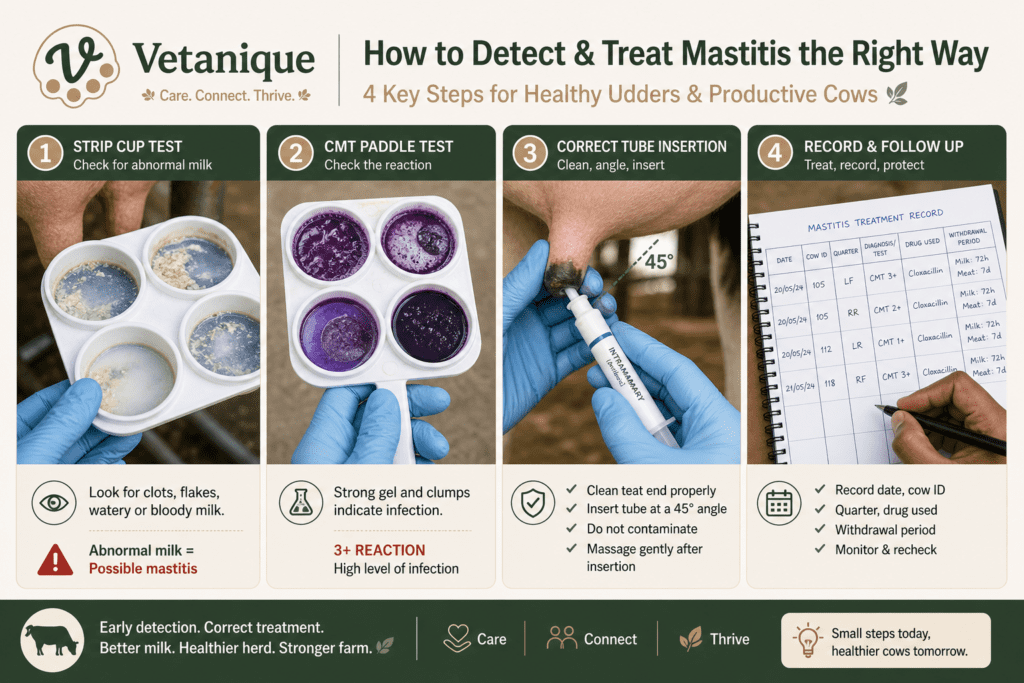
The CMT is a rapid, inexpensive test every dairy farmer should perform weekly on individual cows — and daily on high-risk animals (fresh cows, cows with high SCC history). The reagent reacts with neutrophil DNA in milk to produce a gel-like reaction proportional to the SCC level:
For chronic, recurring, or treatment-resistant mastitis cases, submit a sterile milk sample to your vet for laboratory culture and antibiotic sensitivity testing. This identifies the causative pathogen and guides the most effective antibiotic choice — reducing the risk of treatment failure and antibiotic resistance. Many herds with persistently high SCC have a dominant pathogen that requires a targeted herd-level control programme.
| ⚠ Important: Always Consult Your Vet
Antibiotic selection, dosing, and withholding periods must comply with your country’s regulations. Never use leftover antibiotics from another animal species. Keep all treatment records — required for milk withholding compliance and herd health audits. |
Evidence from dairy herds worldwide shows that 90% of mastitis infections are preventable through consistent implementation of the five-point programme. This remains the gold-standard protocol recommended by vet schools and dairy advisory bodies globally.
| SCC (cells/mL) | Herd Status | Action Required |
| Below 100,000 | Excellent — elite herd | Maintain current protocols |
| 100,000–200,000 | Good — well-managed herd | Continue monitoring, no action needed |
| 200,000–400,000 | Acceptable — improvement possible | Review milking hygiene and dry cow therapy |
| 400,000–600,000 | Poor — investigation required | Herd milk culture, review full 5-point programme |
| Above 600,000 | Critical — significant losses occurring | Immediate veterinary herd investigation |
Mild and moderate clinical mastitis caught early (within 12–24 hours) has a high recovery rate — 70–90% of quarters return to normal production. Severe clinical mastitis or cases left untreated for more than 48 hours may result in permanent tissue damage, reduced production, or loss of the quarter. Gangrenous mastitis requires immediate veterinary treatment and has a poor prognosis for the affected quarter.
Withholding periods vary by drug, country, and milk market. In the UK and EU, most intramammary antibiotic products carry a 4–8 day milk withholding period. Systemic antibiotics may carry longer withholding periods. Always read the label and record the withdrawal date on your treatment records. Milk tested positive for antibiotic residues at the dairy will result in rejection of the entire bulk tank — a costly event for the whole farm.
Fresh cow mastitis is extremely common. Key prevention steps include: correct teat dipping at every milking, ensuring adequate vitamin E and selenium levels (deficiency increases mastitis risk), providing clean, dry calving area bedding, monitoring closely in the first 10 days post-calving, and starting CMT testing from Day 1 post-calving to catch any subclinical infections immediately.
Calf Scours: The Disease That Kills More Calves Than Any Other Neonatal calf diarrhoea — commonly called calf...
Cattle Vaccination Schedule Why Your Cattle Vaccination Schedule Is Your Most Valuable Investment Vaccination is the single most...

Common Signs of Sickness in Cows Why Early Detection Is Worth More Than Any Drug A single missed...