
Calf Scours (Neonatal Diarrhoea): Causes, Treatment & Rehydration Protocol
Calf Scours: The Disease That Kills More Calves Than Any Other Neonatal calf diarrhoea — commonly called calf...
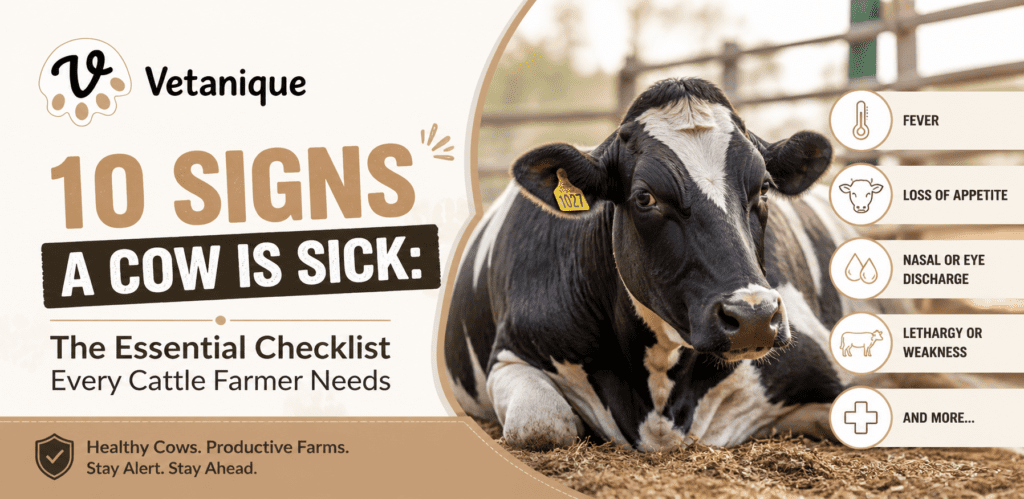
Common Signs of Sickness in Cows
A single missed illness in your herd can cost you far more than a vet bill. Studies from the USDA and FAO estimate that delayed treatment of a disease like mastitis costs an average dairy farm $200–$400 per case in lost milk, treatment, and culling risk. For beef cattle, a case of Bovine Respiratory Disease (BRD) caught late can reduce weight gain by 10–15 kg — directly hitting your bottom line at slaughter.
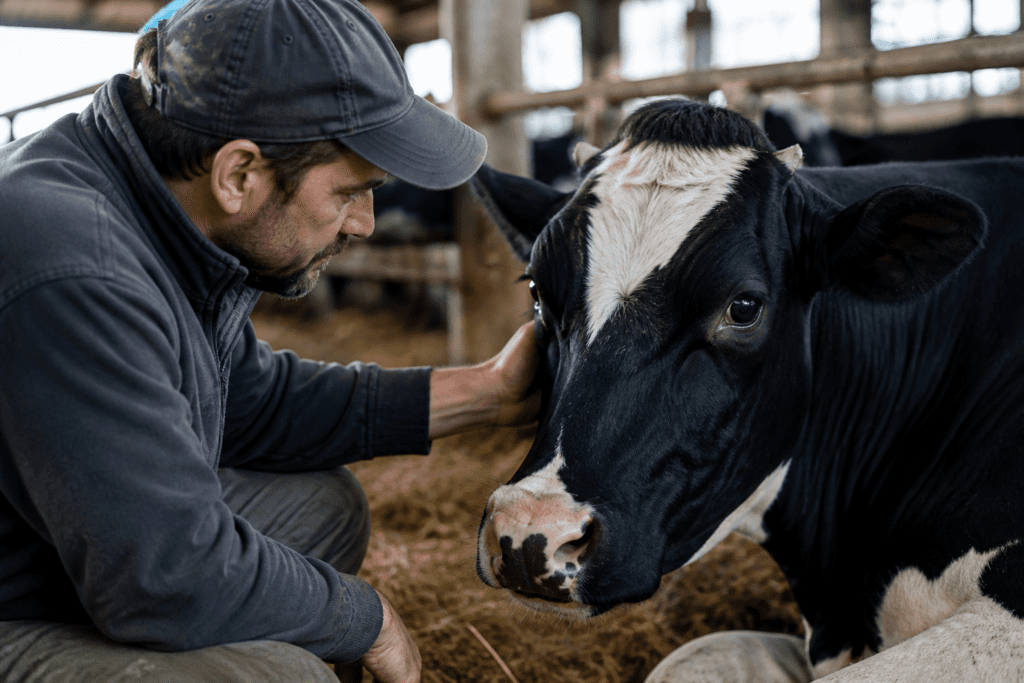
The good news: cows almost always show early warning signs before they become critically ill. The problem is that most farmers only notice when an animal is severely sick — when treatment options narrow and costs multiply. This guide gives you a clear, printable checklist of the 10 most reliable signs a cow is sick, so you can act fast and consult your vet before the situation escalates.
Healthy cattle are alert, curious, and responsive to their surroundings. A sick cow will often appear dull, withdrawn, or separated from the herd. She may stand with her head low, ears drooping, or simply stop interacting with herd-mates. This behavioural change is frequently the very first sign of illness — before any physical symptoms appear. Trust your instinct if a cow ‘just doesn’t look right.’
A healthy cow ruminates (chews the cud) for 6–8 hours per day. If you notice a cow standing with no jaw movement, or leaving feed untouched, this is a high-priority warning. Reduced appetite precedes almost every major cattle illness, from ketosis to BRD to liver fluke. Check this actively at feeding time — don’t wait for the animal to come to you.
For dairy farmers, a sudden unexplained drop in milk yield — even 10–15% — is a reliable early indicator. A cow producing 30 litres per day dropping to 22 litres overnight should be examined immediately. This can signal mastitis, a systemic infection, or a metabolic condition like milk fever or ketosis.
A small amount of clear nasal discharge is normal. Yellow, green, or thick nasal discharge — especially combined with coughing, laboured breathing, or a raised temperature — signals a respiratory infection. Bovine Respiratory Disease (BRD) is the most costly disease in beef cattle globally and progresses rapidly in housed or stressed animals. Act within 24 hours.
Cattle have clear, bright eyes is considered healthy Cloudiness, discharge, squinting, or excessive tearing indicates a problem. Pink eye (Infectious Bovine Keratoconjunctivitis) is highly contagious and spreads rapidly in a herd. Eye changes can also indicate systemic illness — a dull, sunken eye with visible third eyelid (haw) is a serious dehydration sign in calves and sick adults alike.
Normal rectal temperature in cattle is 38.5°C–39.5°C (101.3°F–103.1°F). A temperature above 40°C (104°F) indicates fever and active infection. Any cow with a temperature above 40.5°C should be assessed by a vet immediately. Temperature should be the first thing you check when a cow appears unwell — it is your most objective early warning tool.
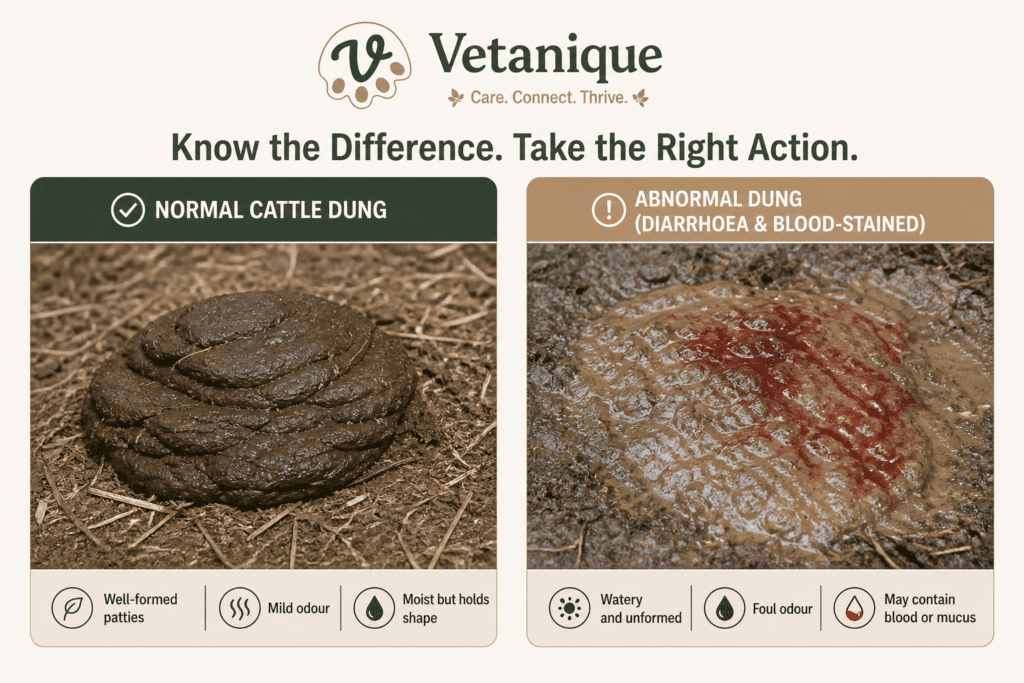
Normal cattle dung is formed, moist, and lands in a ‘cowpat’ shape. Diarrhoea, blood in faeces, very dark or very pale dung, or extremely dry and firm pellets all indicate something is wrong. Calf scours (neonatal diarrhoea) requires emergency rehydration. Adult diarrhoea may indicate salmonellosis, BVD, or toxin ingestion. Constipation in fresh cows can indicate hardware disease.
Cattle are stoic animals. If a cow is limping, placing weight abnormally, or refusing to stand, the pain threshold has already been exceeded. Common causes include foot rot, white line disease, sole ulcers, and digital dermatitis. In dairy cattle, lameness is the third most costly disease after mastitis and reproductive failure. Score lameness 1–5 using a standardised mobility score and act on score 3 or above.
A hot, hard, swollen quarter — or milk that is watery, bloody, or contains clots — is a classic mastitis sign. Perform a California Mastitis Test (CMT) at the first suspicion. Gangrenous mastitis (cold, blue, discoloured quarter) is a life-threatening emergency requiring immediate veterinary intervention. Never delay on udder problems — mastitis resolves faster and costs less the earlier it is caught.
Abnormal abdominal shape is a critical sign. A gas-filled, drum-like left side indicates bloat — a potential emergency if frothy. A gaunt, tucked-up appearance suggests the animal is not eating. Displacement of the abomasum (LDA in dairy cows) produces a characteristic ‘ping’ sound heard with a stethoscope on the left or right flank. Any cow with unusual abdominal distension requires urgent examination.
| ⚠ Call Your Vet NOW If You See Any of These
Temperature above 40.5°C / 105°F Cow unable to stand (downer cow) Signs of bloat — drum-tight left abdomen Bloody, clotted, or absent milk from any quarter Calf with severe diarrhoea and sunken eyes Difficult breathing at rest Uterine or vaginal prolapse Sudden death of any animal in the herd — report to your vet and authorities immediately |
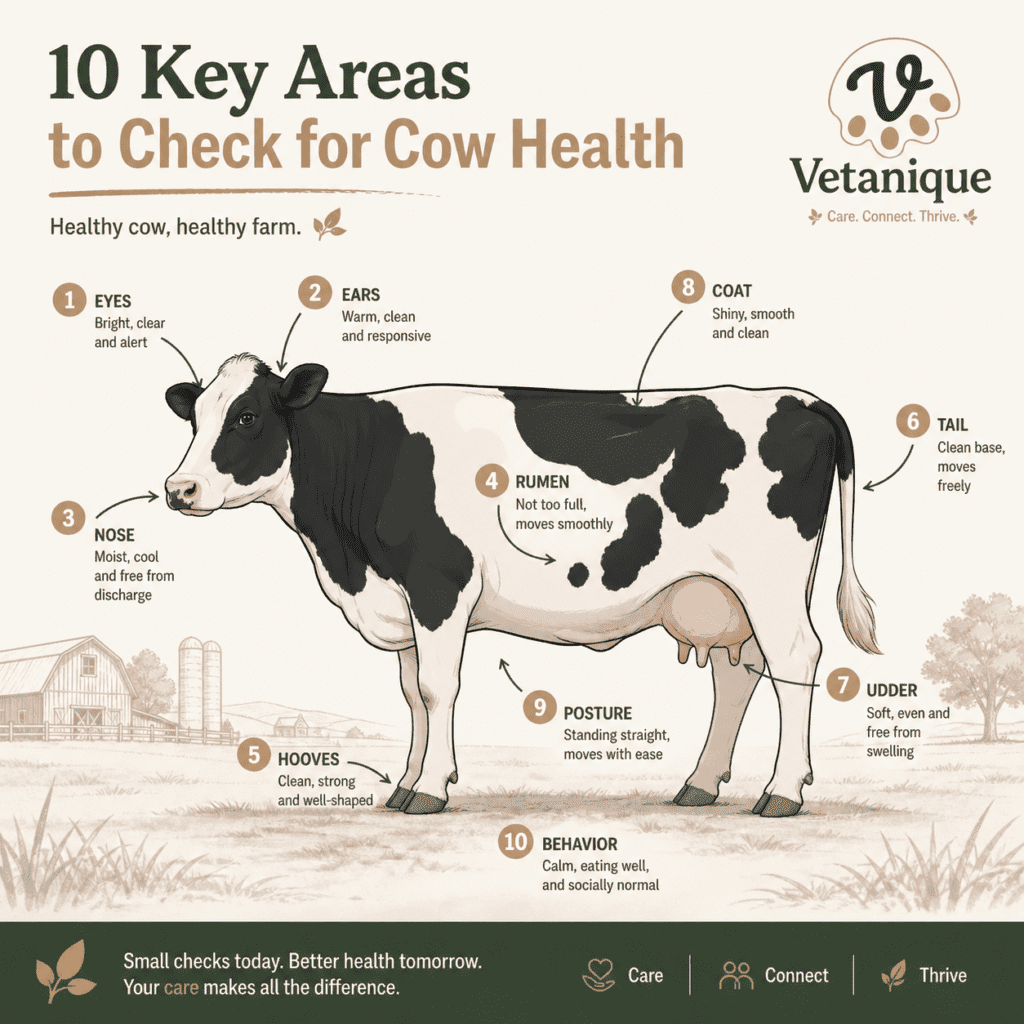
| Check Point | Healthy Signs | Warning Signs | Priority |
| Behaviour | Alert, interacting with herd | Dull, head low, separated | HIGH |
| Appetite / Rumination | Eating well, 6–8 hrs cud chewing | Not eating, no jaw movement | HIGH |
| Temperature | 38.5–39.5°C | Above 40°C | HIGH |
| Nasal discharge | Clear, minimal | Yellow/green/thick | HIGH |
| Eyes | Clear, bright | Cloudy, squinting, discharge | MEDIUM |
| Dung | Formed cowpat | Diarrhoea, blood, hard pellets | HIGH |
| Milk (dairy) | Normal colour and volume | Clots, watery, blood | HIGH |
| Legs/hooves | Even weight bearing | Limping, reluctance to walk | MEDIUM |
| Abdomen | Normal symmetry | Bloated left, tucked-up flanks | HIGH |
| Coat/skin | Smooth, shiny | Rough, dull, patchy hair loss | MEDIUM |
Most serious cattle diseases produce visible signs within 24–72 hours of initial infection. Respiratory diseases like BRD can go from subclinical to severe pneumonia in 48 hours in stressed animals. This is why a daily ‘health walk’ at feeding time — spending 3–5 minutes observing individual animals — is your single most valuable disease management tool.
Some minor conditions (mild lameness, early-stage pinkeye) can be managed on-farm with appropriate medicines. However, any cow with a high temperature, off feed for more than 24 hours, respiratory distress, reproductive emergencies, or any sign of a notifiable disease (such as FMD) must be seen by a vet. Self-treating systemic infections without proper diagnosis wastes time and money, and contributes to antibiotic resistance.
The most common causes are: fever from infection (BRD, mastitis, metritis), metabolic disease (ketosis, grass tetany, milk fever), digestive disorders (rumen acidosis, hardware disease), and pain from lameness or injury. A full clinical examination, including temperature and rumen motility assessment, is needed to identify the cause.
The most efficient approach is structured pen walking — moving slowly through cattle at a fixed time each day, ideally at feeding. Train yourself to scan for separation from the herd, posture abnormalities, and inappetence first. These are the three fastest indicators visible from 10 metres. Use a scoring system for lameness (1–5 mobility score) and body condition (1–5 BCS scale) to track changes objectively over time.
➡ Normal Vital Signs in Cattle: Temperature, Pulse & Breathing Guide
➡ Complete Cattle Vaccination Schedule: Dairy, Beef & Calves
➡ Mastitis in Dairy Cows: Causes, Treatment & Prevention
➡ Calf Scours: Rehydration Protocol & Prevention Guide
Calf Scours: The Disease That Kills More Calves Than Any Other Neonatal calf diarrhoea — commonly called calf...
Cattle Vaccination Schedule Why Your Cattle Vaccination Schedule Is Your Most Valuable Investment Vaccination is the single most...
Mastitis in Dairy Cows: Causes, Types, Treatment & Prevention The Real Cost of Mastitis — Why This Is...