Signs of Sick Chicken
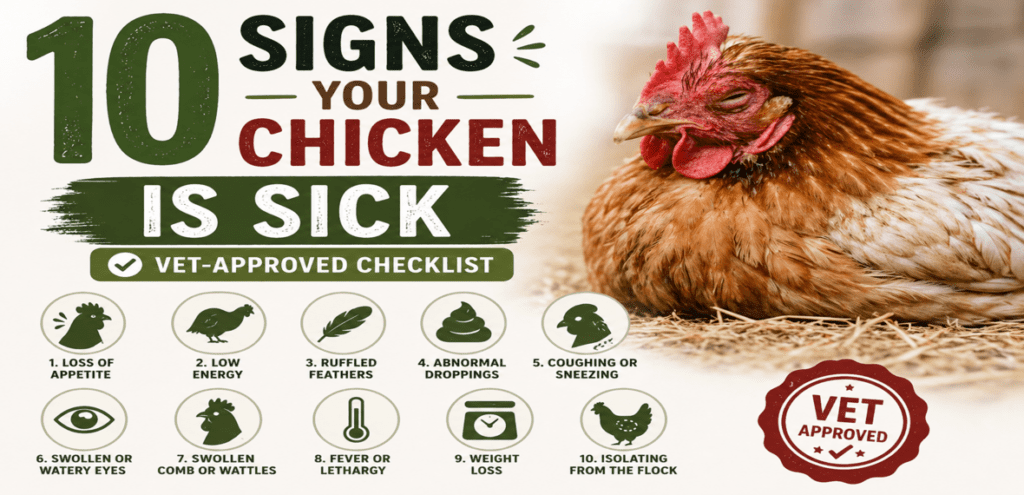
A sick chicken can decline within 24 to 48 hours — and by the time obvious symptoms appear, the illness may already be advanced. Knowing the early signs your chicken is sick is the single most important skill any poultry keeper can have, whether you manage a backyard flock of five hens or a commercial broiler operation of 50,000 birds. This vet-approved checklist covers every major warning sign across all poultry species — chicken, duck, turkey, and quail — so you can act fast, reduce losses, and protect the rest of your flock.
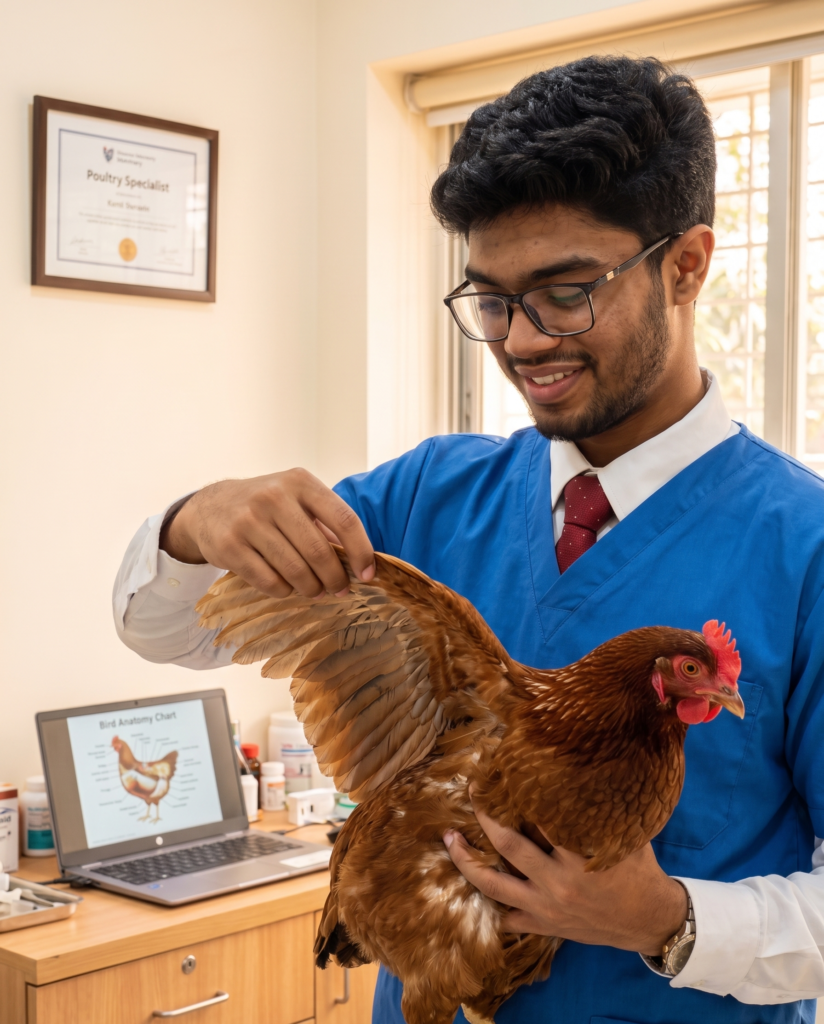
Read through all 10 signs below and bookmark this page for quick reference. If your bird shows three or more of these symptoms simultaneously, contact a licensed poultry veterinarian immediately.
Why Early Detection Saves Lives (and Money)
Most poultry diseases spread through faecal contamination, respiratory secretions, or shared water and feed. A single infected bird can silently expose an entire flock within 12 hours. Early detection gives you a critical window to isolate the sick bird, administer appropriate treatment, and prevent herd-wide mortality — which in a commercial setting can mean thousands of dollars in losses.
VETERINARY INSIGHT: In clinical practice, farmers who identify and isolate sick birds within the first 24 hours reduce flock mortality by up to 60% compared to those who wait until multiple birds are affected.
The 10 Signs Your Chicken Is Sick
Sign 1 — Changes in Posture or Gait
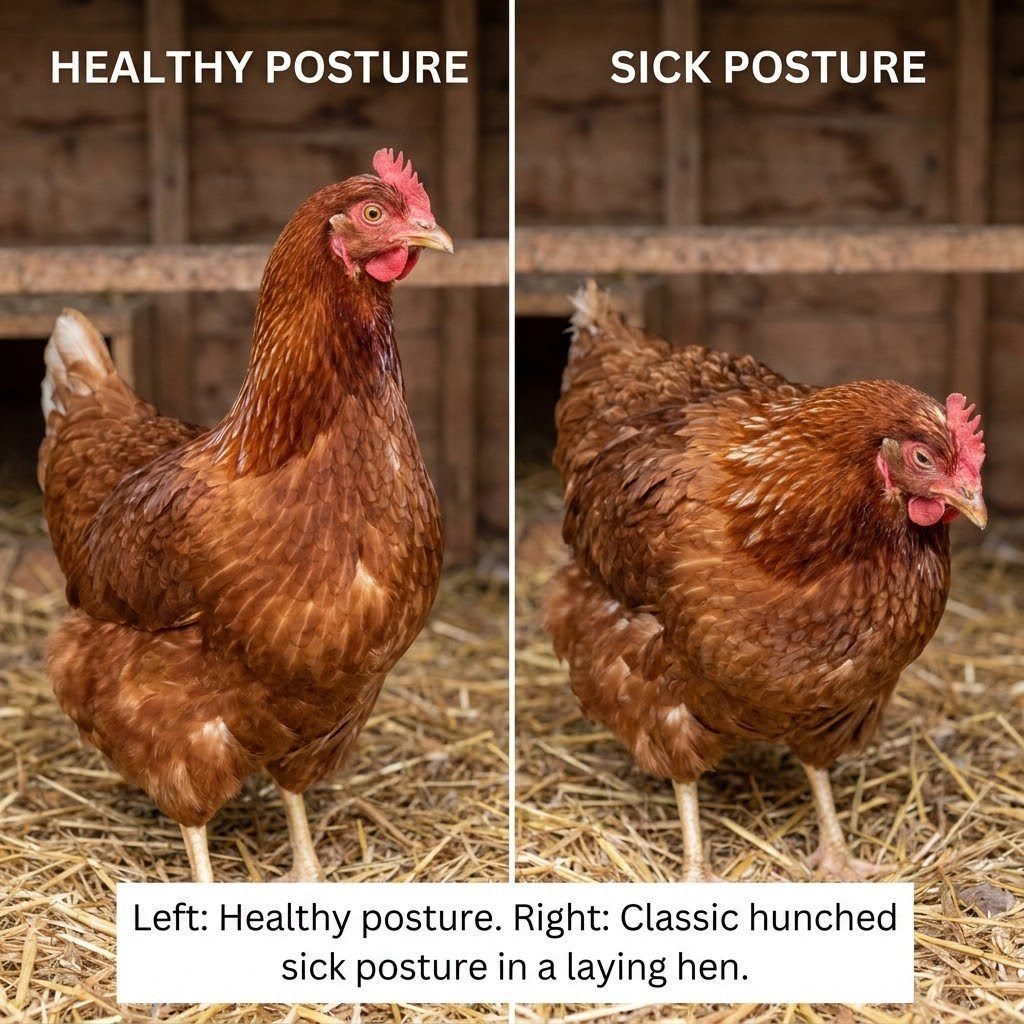
A healthy chicken stands tall, moves confidently, and holds its wings close to its body. A sick bird often adopts a hunched posture — head pulled in, feathers puffed out, and a reluctance to move. Lameness, leg weakness, or an inability to bear weight can indicate Marek’s disease, bumblefoot, joint infections, or nutritional deficiencies such as calcium or Vitamin B2 deficiency.
What to do: Isolate the bird immediately. Observe for 24 hours before attempting home treatment. Any neurological signs (twisted neck, star-gazing) warrant emergency veterinary attention.
Sign 2 — Dull, Sunken, or Partially Closed Eyes
Bright, clear, fully open eyes are a hallmark of a healthy bird. Dull or sunken eyes, partial closure, or visible discharge around the eye socket are early indicators of respiratory infections (Mycoplasma, Infectious Bronchitis), Newcastle disease, or generalised systemic illness. In ducks and geese, eye discharge combined with nasal wetness is a classic sign of Duck Virus Enteritis (Duck Plague).
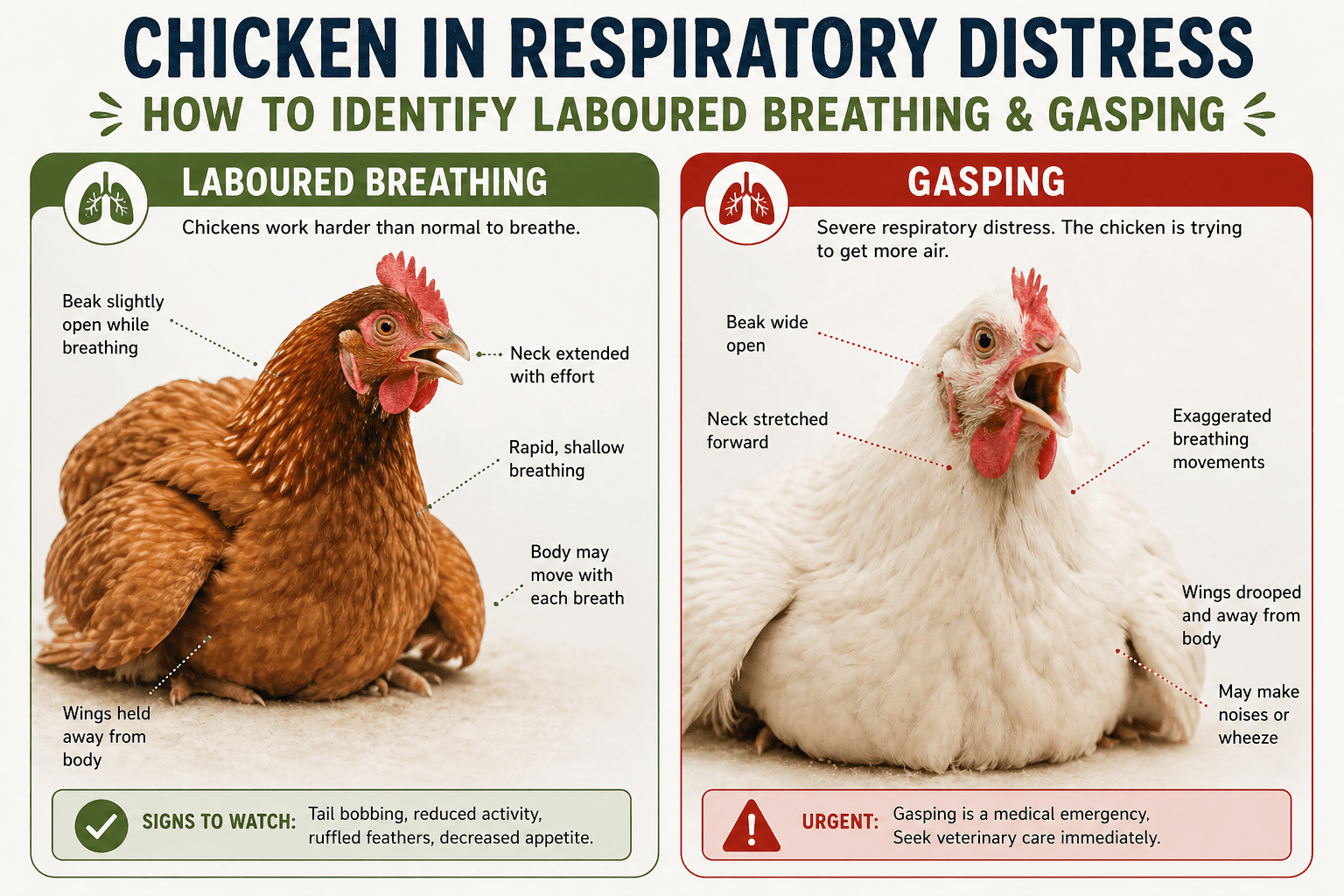
Sign 3 — Laboured Breathing, Gasping, or Gurgling Sounds
Respiratory distress is one of the most urgent signs in poultry. Gasping for air, an open beak, gurgling, rattling, or a clicking sound when breathing can indicate Chronic Respiratory Disease (CRD), Infectious Laryngotracheitis (ILT), Aspergillosis, or — most critically — Avian Influenza (H5N1). Any cluster of birds showing respiratory signs simultaneously must be reported to your local veterinary authority.
Sign 4 — Abnormal Droppings
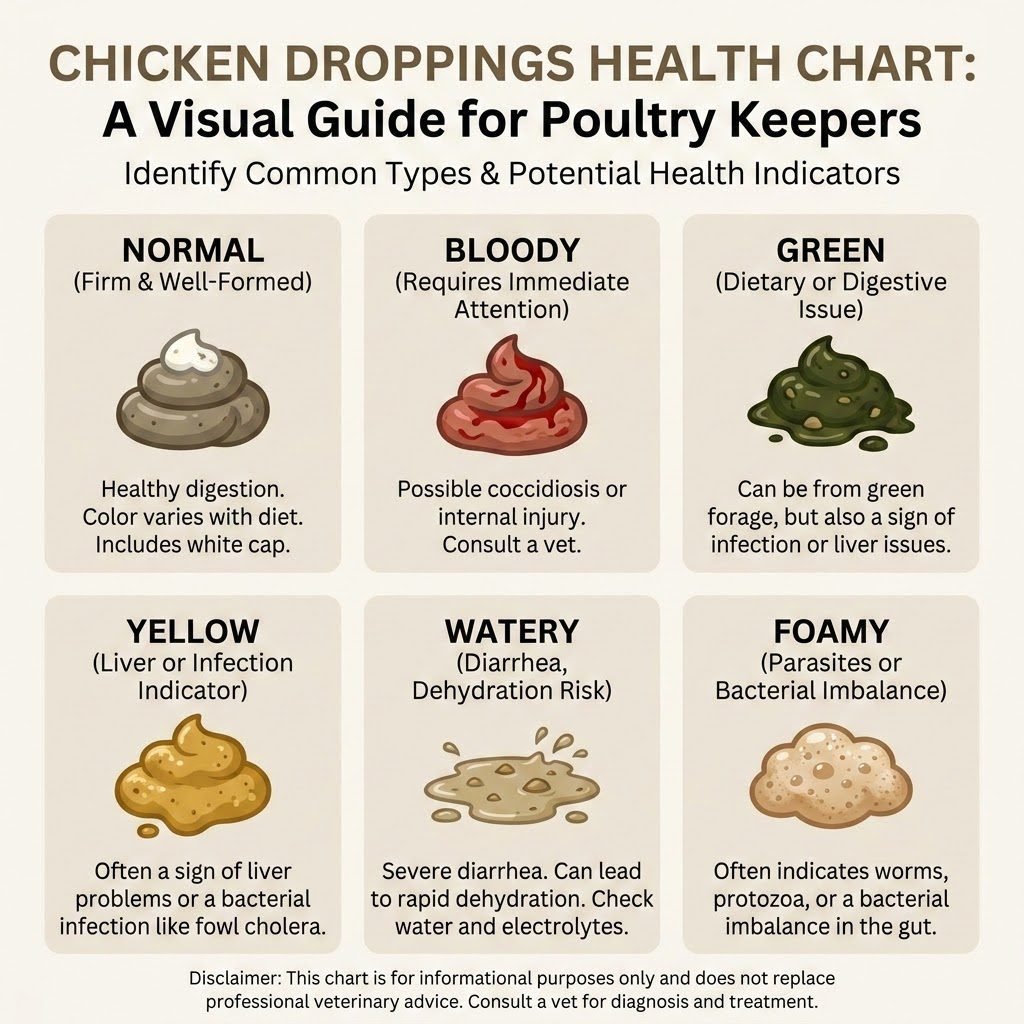
Chicken droppings are one of the most reliable health indicators available to any farmer. Normal droppings are firm and brown with a white urate cap. Abnormal droppings include:
- Bloody droppings — most commonly Coccidiosis (urgent treatment required)
- Bright green/yellow droppings — Newcastle disease, Avian Influenza, or liver disease
- Watery diarrhoea — stress, Salmonella, or Infectious Bursal Disease (Gumboro)
- White pasty droppings around the vent — Omphalitis (navel ill) in chicks
- Foamy droppings — Histomoniasis (Blackhead disease) in turkeys
Sign 5 — Reduced or Absent Feed and Water Intake
A bird that stops eating or drinking is in serious trouble. Anorexia in chickens can result from crop impaction, sour crop, Mycoplasma infection, or pain from egg binding. In commercial flocks, a sudden drop in average feed consumption of more than 10% across the house is a flock-level alarm that warrants immediate investigation.
QUICK CHECK: Weigh your feeder contents at the same time each morning. A sudden decrease in consumption — even before birds appear visually sick — is your earliest warning signal.
Sign 6 — Drop in Egg Production or Poor Shell Quality
Laying hens are exquisitely sensitive to illness, stress, and environmental changes. A sudden drop in egg production — even as small as 5% in one day — can signal Infectious Bronchitis, Newcastle disease, Egg Drop Syndrome, or nutritional deficiency (particularly calcium or Vitamin D3). Soft-shelled, thin-shelled, or misshapen eggs often accompany respiratory or viral infections.
Sign 7 — Pale or Discoloured Comb and Wattles
The comb and wattles are an excellent external health barometer. A healthy laying hen has a bright red, warm, firm comb. Colour changes indicate:
- Pale or white comb — internal bleeding, heavy parasite load, or Marek’s disease
- Dark purple or blue comb — circulatory failure, Newcastle disease, severe Avian Influenza
- Yellow-tinged comb — fatty liver disease or Hepatitis E infection
- Crusty/scabbed lesions — Fowl Pox (dry form)
Sign 8 — Ruffled Feathers and Lethargy
When a chicken fluffs its feathers and sits quietly away from the rest of the flock, it is directing energy inward to fight infection. This is a non-specific but highly reliable sign of illness. Ruffled feathers combined with shivering often indicate a high fever or hypothermia in chicks. Lethargy combined with any of the other signs on this list should be treated as a medical emergency.
Sign 9 — Swollen Face, Eyes, or Sinuses
Swelling around the eye or sinus area (‘swollen face’ or orbital oedema) is a hallmark of Mycoplasma gallisepticum infection, Swollen Head Syndrome in broilers, or advanced Infectious Bronchitis. In turkeys, facial swelling combined with a dark, discoloured head can indicate Histomoniasis (Blackhead disease). Swollen joints (hock joints, keel bursa) suggest bacterial arthritis or Marek’s disease.
Sign 10 — Sudden or Unexplained Death
When a previously healthy-looking bird is found dead, do not assume it was old age. Sudden death in poultry can result from Gumboro disease (young birds), heart attack in fast-growing broilers, Avian Influenza, acute Colibacillosis (E. coli septicaemia), or toxin ingestion. Always conduct or request a post-mortem (necropsy) on sudden deaths, especially if more than one bird is affected within 48 hours.
URGENT: If you find two or more birds dead within 24 hours with no obvious cause, contact your national veterinary authority or avian disease lab immediately. This is a potential disease outbreak notification threshold in most countries.
Sick Chicken Symptoms by System — Quick Reference Table
| Body System |
Warning Sign |
Possible Causes |
Urgency |
| Respiratory |
Gasping, gurgling, open-mouth breathing |
CRD, ILT, Aspergillosis, Avian Influenza |
URGENT |
| Digestive |
Bloody/green/watery droppings, crop issues |
Coccidiosis, Newcastle, Salmonella |
HIGH |
| Reproductive |
Drop in egg production, soft shells |
Infectious Bronchitis, Egg Drop Syndrome |
MEDIUM |
| Neurological |
Twisted neck, star-gazing, paralysis |
Marek’s disease, Newcastle disease |
URGENT |
| Integument |
Ruffled feathers, scabs, crusty lesions |
Fowl Pox, mites, fungal infection |
MEDIUM |
| Circulatory |
Blue/purple comb, pale wattles |
Avian Influenza, heart failure, anaemia |
URGENT |
| Musculoskeletal |
Lameness, swollen joints, inability to walk |
Marek’s, bumblefoot, bacterial arthritis |
HIGH |
When to Call a Veterinarian
Call a licensed poultry vet without delay if you observe any of the following:
- Three or more birds showing symptoms simultaneously
- Any neurological signs (head tilt, paralysis, twisted neck)
- Sudden death of two or more birds within 24 hours
- Severe respiratory distress across a group of birds
- Suspected Avian Influenza (any unusual death pattern with respiratory signs)
Frequently Asked Questions
| Question |
Answer |
| How do I know if my chicken is dying? |
A dying chicken typically stops eating and drinking, has laboured breathing, cannot stand, has a very pale or blue comb, and sits hunched with closed eyes. These signs together indicate organ failure. Consult a vet immediately — a bird in this state requires emergency care or humane euthanasia. |
| What are the first signs of Newcastle disease in chickens? |
Early Newcastle disease signs include sudden drops in egg production, green watery droppings, respiratory distress (gurgling, gasping), and neurological symptoms like twisted neck and paralysis. It spreads extremely rapidly — isolate affected birds and contact your veterinary authority immediately. |
| Can a sick chicken recover on its own? |
Mild stress-related illness may resolve with supportive care (clean water, warmth, electrolytes). However, most infectious diseases — Coccidiosis, Mycoplasma, Marek’s — require specific treatment. Never wait more than 24 hours before intervening. Early treatment dramatically improves survival rates. |
| How do you treat a sick chicken at home? |
Isolate the bird in a warm, dry space. Offer fresh water with electrolytes. Identify the likely cause from the symptoms checklist above and administer appropriate treatment (e.g. Amprolium for Coccidiosis). Always consult a vet for correct diagnosis and prescription medication. |
| What does a healthy chicken look like vs a sick chicken? |
A healthy chicken has bright eyes, a red upright comb, clean vent, normal firm droppings, and moves actively. A sick chicken has dull sunken eyes, ruffled feathers, a pale comb, abnormal droppings, and sits away from the flock in a hunched posture. |
| How quickly can a chicken die from illness? |
Very quickly. Conditions like Avian Influenza, acute E. coli septicaemia, and Gumboro disease can kill a bird within 24-48 hours of the first visible symptoms. Coccidiosis can be fatal within 3-5 days if untreated. This is why daily flock observation is critical. |