
DogVet Tips & FAQs
10 Signs Your Dog Is Sick: Vet-Approved Symptom Checklist
Signs Your Dog is Sick Symptoms As a dog owner, you know your pet better than anyone. But...
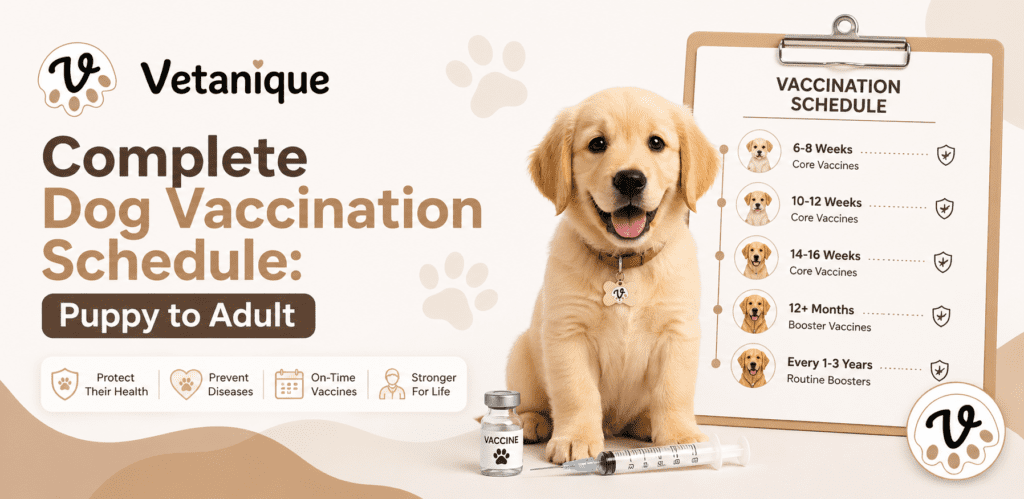
Vaccinations are the single most cost-effective health investment you can make for your dog. A parvovirus infection that could have been prevented by a $25 vaccine can cost thousands to treat — with no guarantee of survival. This complete guide covers exactly which vaccines your dog needs, when to give them, and how to stay on schedule.
| ⚡ QUICK ANSWER
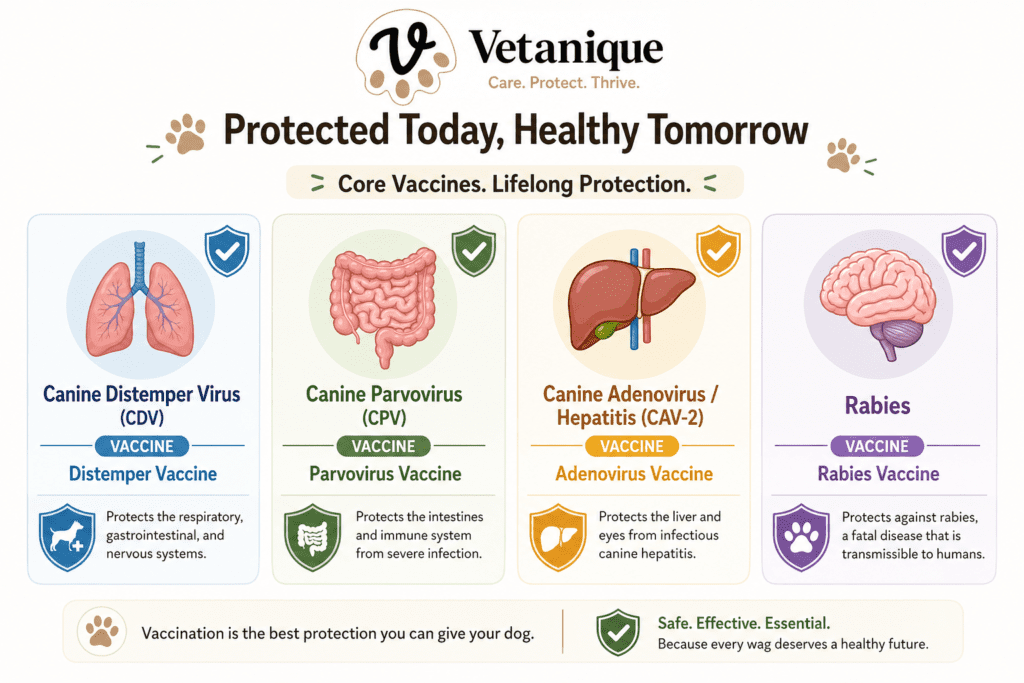
Puppy vaccinations begin at 6–8 weeks and continue every 3–4 weeks until 16 weeks of age. Core vaccines include Distemper, Parvovirus, Adenovirus (Hepatitis), and Rabies. Adult dogs need annual or 3-yearly boosters depending on the vaccine type and your local legal requirements. |
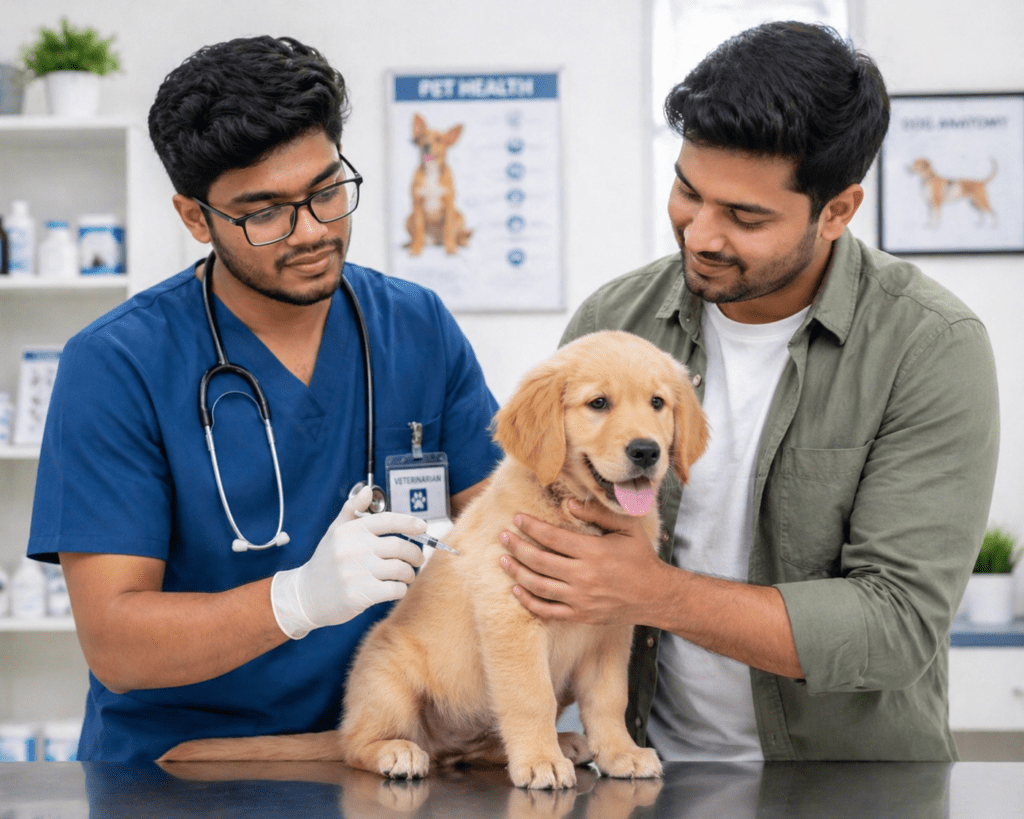
Not all vaccines are recommended for every dog. Veterinary guidelines divide them into two categories:
| Type | What It Means | Examples |
| Core Vaccines | Recommended for ALL dogs globally — regardless of lifestyle or location | Distemper, Parvovirus, Adenovirus (Hepatitis), Rabies |
| Non-Core Vaccines | Recommended based on lifestyle, geography, or risk exposure | Bordetella (Kennel Cough), Leptospirosis, Lyme Disease, Canine Influenza |
Puppies receive maternal antibodies through their mother’s milk. These fade between 6–16 weeks of age — the critical window when vaccinations must begin. Missing this window leaves puppies vulnerable to potentially fatal diseases.
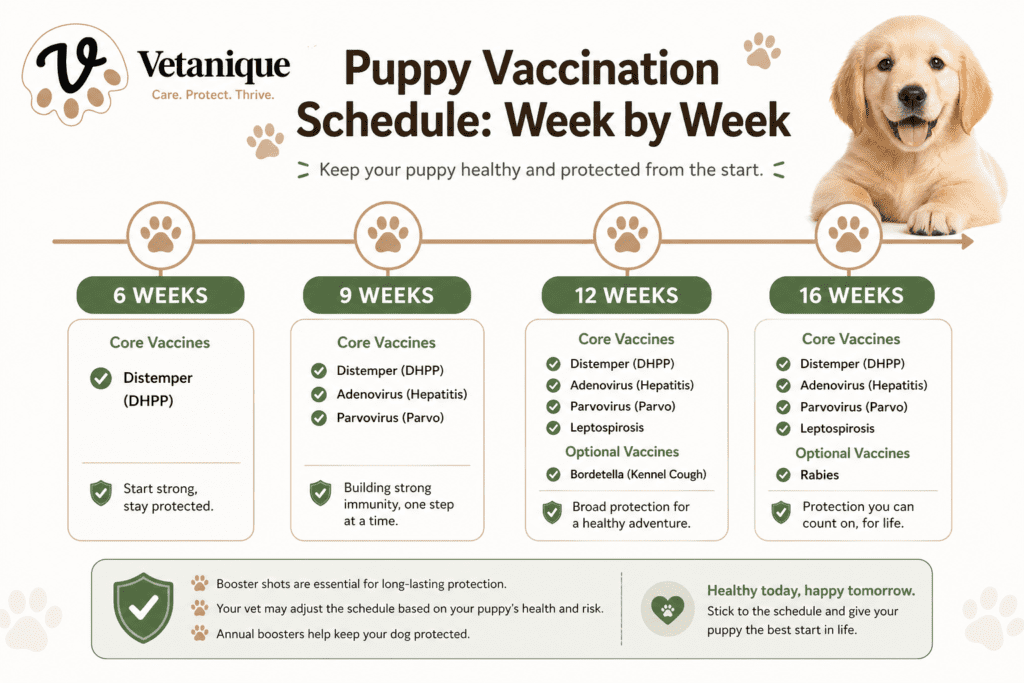
| Age | Core Vaccines | Non-Core (If Recommended) | Notes |
| 6–8 weeks | Distemper, Parvovirus, Adenovirus (DA2P) | Bordetella | First puppy visit — also check for worms and parasites |
| 10–12 weeks | DA2P booster + Leptospirosis | Bordetella booster, Lyme (if high risk area) | Second visit — also start flea/tick prevention |
| 14–16 weeks | DA2P booster + Rabies | Canine Influenza (if boarding) | Final puppy series — critical to complete before 16 weeks |
| 12–16 months | DA2P + Rabies booster | Leptospirosis booster | First adult booster — ensures full immunity develops |
Once the puppy series is complete, adult dogs require regular boosters to maintain protection. Booster frequency depends on the vaccine type and your country’s regulations.
| Vaccine | Booster Frequency | Notes |
| Distemper / Parvovirus / Adenovirus (DA2P) | Every 1–3 years (per vet guidance) | After initial adult booster, many vets move to 3-year schedule |
| Rabies | Every 1–3 years (legal requirement varies by country) | Legally mandated in most countries — check your local law |
| Leptospirosis | Annually | Especially important if your dog swims or lives near wildlife |
| Bordetella (Kennel Cough) | Annually or as required | Required by most boarding kennels and groomers |
| Lyme Disease | Annually (tick-endemic areas only) | Consult your vet if you live in or travel to high-tick areas |
Distemper is a severe, often fatal virus affecting the respiratory, gastrointestinal, and nervous systems. It spreads through airborne droplets and has no cure — only supportive treatment. Survival rates are low even with intensive care.
Parvovirus attacks the intestinal lining and immune system, causing severe haemorrhagic diarrhoea, vomiting, and dehydration. It is extraordinarily resilient — surviving in soil for up to 7 years. Mortality rates in unvaccinated dogs can exceed 90% without treatment.
Infectious canine hepatitis attacks the liver and eyes. While less commonly seen in vaccinated populations, outbreaks still occur in unvaccinated communities, particularly in rescue and shelter dogs.
Rabies is universally fatal in unvaccinated animals once symptoms appear. It is transmissible to humans (zoonotic) and vaccination is a legal requirement in most countries. Even in rabies-free regions, vaccination may be required for travel.
| 🔴 IMPORTANT: Can Vaccinated Dogs Still Get Sick?
Yes — no vaccine offers 100% protection. However, vaccinated dogs who do contract a disease typically experience significantly milder symptoms and have much higher survival rates than unvaccinated dogs. Vaccine failure can occur if: the puppy series was not completed correctly, the maternal antibody window interfered, vaccines were stored or handled incorrectly, or the dog was immunosuppressed at the time of vaccination. |
Most dogs experience mild, temporary side effects after vaccination — these are signs the immune system is responding:
| 🚨 Seek immediate vet care if your dog shows:
• Severe vomiting or diarrhoea within 30 minutes of vaccination • Facial swelling, hives, or difficulty breathing (anaphylaxis) • Collapse or extreme weakness These reactions are rare but require emergency treatment. |
Vaccination protocols vary by region based on disease prevalence and local law. Always confirm with your local vet — this guide reflects general international guidelines from the World Small Animal Veterinary Association (WSAVA).
| Region | Key Considerations |
| USA / Canada | Rabies vaccination legally required in most states/provinces. Lyme disease vaccine recommended in tick-endemic areas (Northeast, Midwest). |
| UK / Europe | Leishmania vaccine available and recommended in southern Europe. Leptospirosis vaccine widely used. Rabies required for pet travel. |
| Australia / NZ | Rabies-free — no rabies vaccine required. Tick prevention critical. Heartworm prevention essential in tropical/subtropical areas. |
| Asia / Middle East | Rabies vaccination critical. Leptospirosis risk high in humid regions. Confirm schedules with a registered local vet. |
| Latin America | Parvovirus and distemper remain common in unvaccinated populations. Rabies endemic in many areas — vaccine mandatory. |
Don’t panic — contact your vet. In most cases, missed boosters can be administered without restarting the entire series. For dogs overdue by many years, a full series may be recommended. Never assume immunity has lapsed without veterinary guidance.
While some core vaccines are available for purchase without a prescription in certain countries, home vaccination is strongly discouraged. Vaccines must be stored correctly (cold chain), administered properly, and your vet needs to examine your dog to confirm it is healthy enough to vaccinate. A missed health condition found during a vaccine visit can be life-saving.
Most vets recommend waiting 7–10 days after the final puppy vaccination (usually 16 weeks) before visiting high-traffic dog areas like parks, boarding facilities, and dog beaches. Early socialisation is vital — controlled, safe environments with vaccinated dogs can begin earlier.
| 💡 RELATED ARTICLES
→ 10 Signs Your Dog Is Sick: Vet-Approved Symptom Checklist → Parvovirus in Dogs: Symptoms, Treatment & Survival Rates → Puppy Vaccination Schedule: First Shots, Boosters & Timing Explained → Flea & Tick Prevention for Dogs: Complete Comparison Guide |
Signs Your Dog is Sick Symptoms As a dog owner, you know your pet better than anyone. But...