

CatCat Facts
Hidden Facts About Cats: 10 Amazing Things Every Cat Owner Should Know
Hidden Facts About Cats: 10 Amazing Things Every Cat Owner Should Know Cats have fascinated humans for thousands...
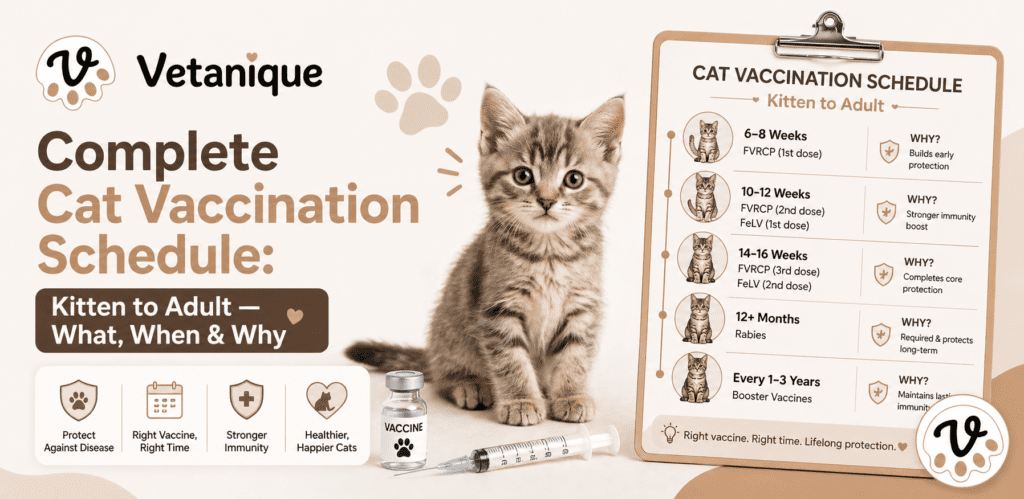
Cat Vaccination Schedule: Kitten to Adult
| ⚡ QUICK ANSWER |
| Kittens receive their first core vaccines at 6–8 weeks old, with boosters every 3–4 weeks until 16 weeks of age. Core vaccines for cats include FVRCP (feline herpesvirus, calicivirus, and panleukopenia) and rabies. Adult cats require boosters every 1–3 years depending on the vaccine and lifestyle. Your vet will create a personalized schedule based on your cat’s risk factors. |
Vaccination is the single most cost-effective health investment you can make for your cat. A complete vaccination series protects your cat from deadly diseases like feline panleukopenia (which kills up to 90% of unvaccinated kittens), feline herpesvirus, and rabies — diseases that are entirely preventable with timely vaccination.
Yet many cat owners are uncertain about which vaccines are necessary, when to give them, and how often they need to be repeated. This guide gives you a clear, vet-approved schedule from kittenhood through to the senior years, along with explanations of what each vaccine does and why it matters.
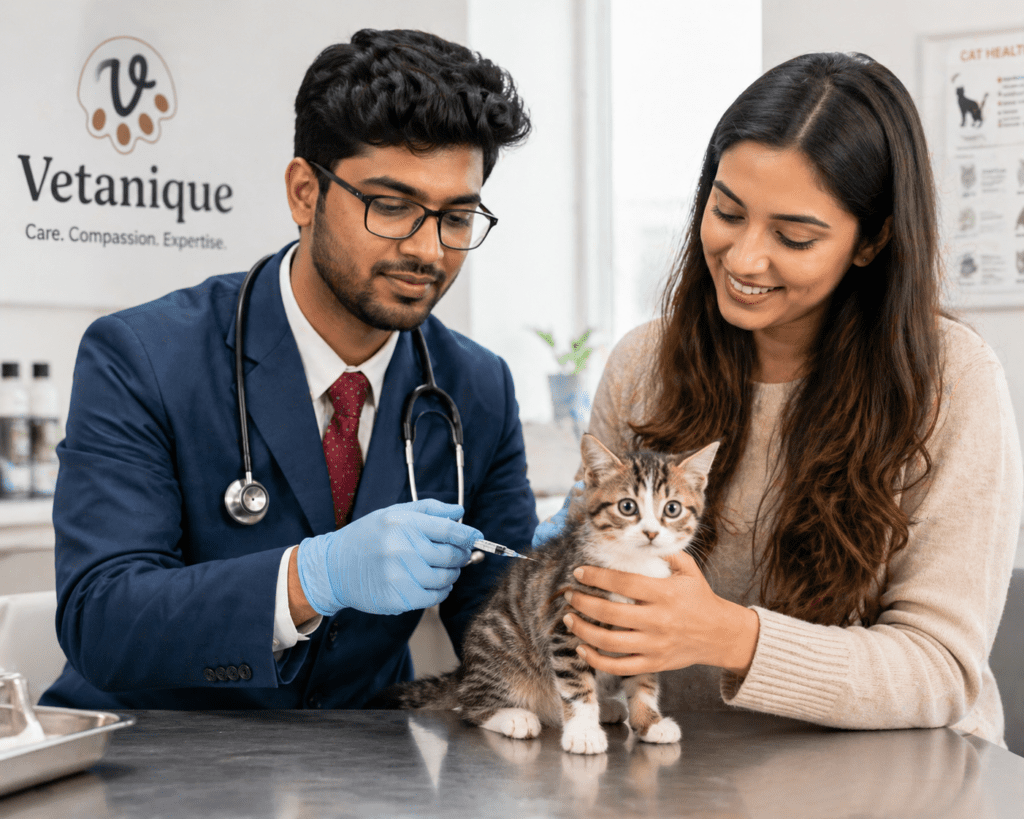
Vaccines are classified as ‘core’ (recommended for ALL cats regardless of lifestyle) or ‘non-core’ (recommended based on your cat’s individual risk factors such as outdoor access, exposure to other cats, or geographic location).
| Core Vaccines (All Cats) | Non-Core Vaccines (Risk-Based) |
| FVRCP — Feline herpesvirus (rhinotracheitis) | FeLV — Feline leukaemia virus |
| FVRCP — Feline calicivirus | FIV — Feline immunodeficiency virus |
| FVRCP — Feline panleukopenia (distemper) | Chlamydiosis (Chlamydophila felis) |
| Rabies (required by law in many countries) | Bordetella bronchiseptica |
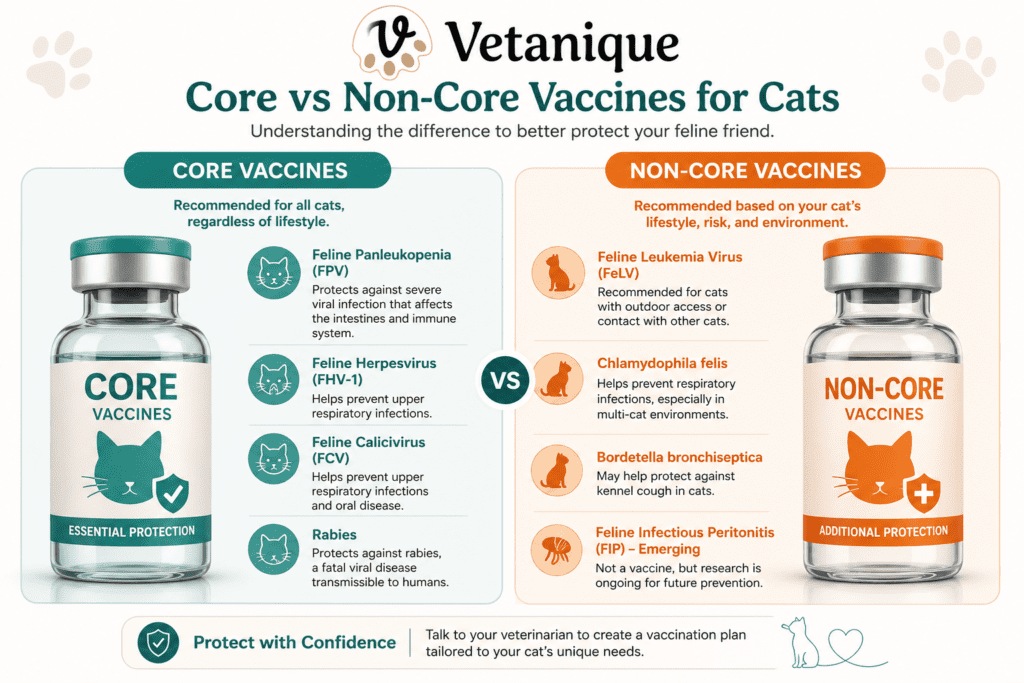
| Age | Vaccine(s) | Notes |
| 6–8 weeks | FVRCP (1st dose) | Begin only if kitten is healthy and weaned |
| 10–12 weeks | FVRCP (2nd dose) + FeLV (if at risk) | 3–4 week interval from 1st dose |
| 14–16 weeks | FVRCP (3rd/final dose) + Rabies | Final kitten series. Rabies as required by law |
| 16 weeks+ | FeLV (2nd dose if started) | Completes FeLV primary series |
| 💡 Why So Many Kitten Vaccines? |
| Kittens are born with maternal antibodies passed from their mother’s colostrum (first milk). These antibodies protect the kitten early in life but also ‘block’ vaccines from working properly. We don’t know exactly when maternal immunity wanes in each individual kitten — so we give a series of vaccines spaced 3–4 weeks apart to ensure that at least one dose is administered AFTER maternal antibody levels drop low enough for the vaccine to ‘take’. This is why the series must be completed, even if your kitten received vaccines from a breeder or rescue. |
| Vaccine | First Adult Booster | Ongoing Frequency |
| FVRCP | 1 year after completing kitten series | Every 3 years (low-risk indoor cats) |
| Rabies | 1 year after first dose | Every 1–3 years (depends on vaccine brand/local law) |
| FeLV | 1 year after completing primary series | Every 2 years (outdoor/at-risk cats) |
| FIV | Per manufacturer schedule | Annual (where vaccine is available) |
Senior cats still need vaccinations, but the frequency and type may be adjusted based on health status. A cat with kidney disease, cancer, or other immune-compromising conditions may require a modified approach — your vet will guide you.
A vaccination appointment is more than just a jab. Your vet will perform a full physical examination before any vaccine is given, including checking your cat’s:
Vaccines are only administered to healthy animals. If your cat is unwell on the day, the vet may recommend rescheduling. Always bring your vaccination record booklet to each appointment.
Vaccines are extensively tested for safety before approval. The vast majority of cats experience no side effects at all. When they do occur, side effects are typically mild and temporary:
| Side Effect | What to Do |
| Mild soreness at injection site (1–2 days) | Normal — no action needed |
| Lethargy or reduced appetite (24 hours) | Normal — monitor and ensure water intake |
| Low-grade fever (24 hours) | Normal — monitor. Call vet if persistent |
| Small lump at injection site (weeks) | Mention at next visit — usually resolves |
| Facial swelling, hives, vomiting (within 1 hour) | Rare allergic reaction — call vet IMMEDIATELY |
| ⚠️ Injection-Site Sarcoma (FISS) |
| Feline injection-site sarcoma is a rare but serious tumor (estimated 1 in 10,000–30,000 vaccinated cats) that can develop at injection sites. Modern adjuvant-free vaccines and altered injection protocols have significantly reduced this risk. Monitor any lump at an injection site: if it hasn’t gone within 3 months, is larger than 2cm, or is growing — see your vet immediately. |
Some cat vaccines are sold over-the-counter in certain countries. However, vaccination by a veterinarian ensures proper handling, cold-chain maintenance, and simultaneous health examination. It also provides a legal vaccination record.
Yes. Core vaccines are recommended for ALL cats. Even indoor cats can escape, encounter other animals, or be exposed to pathogens you bring in on clothing or shoes. Rabies vaccination may also be legally required regardless of indoor status.
Speak to your vet. Depending on how long ago the last vaccine was given, they may restart a primary series or simply give a single booster. Immunity doesn’t disappear overnight — don’t panic, but do book promptly.
Modified-live vaccines (which are most FVRCP vaccines) should generally not be given during pregnancy. Inactivated vaccines are safer but your vet will assess the risk-benefit in each case.
Hidden Facts About Cats: 10 Amazing Things Every Cat Owner Should Know Cats have fascinated humans for thousands...
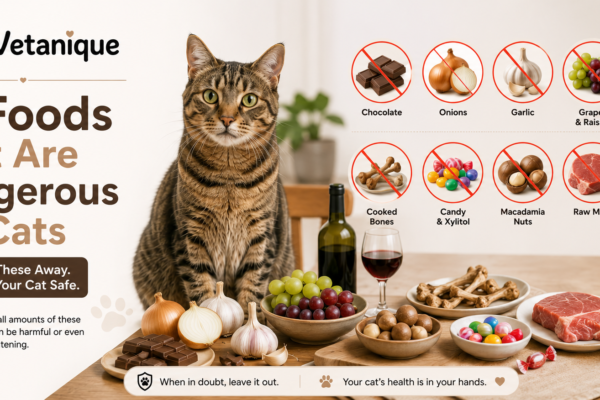
10 Foods You Should Never Feed Your Cat Knowing the foods you should never feed your cat is...
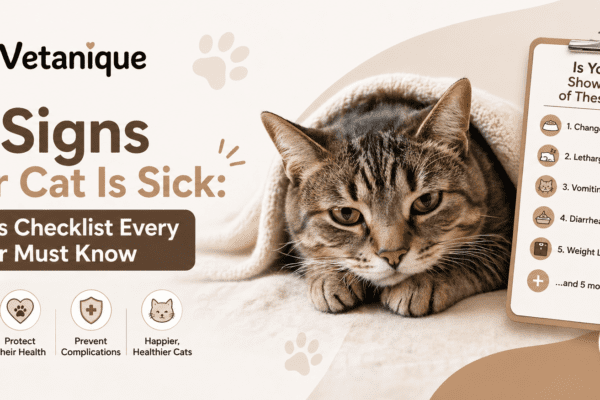
Most Common Signs Your Cat is Sick Cats are masters of disguise when it comes to hiding pain...